Monkeypox virus is a viral infection caused by monkeypox virus (MPXV). This virus is spread primarily through contact with infected material and respiratory transmission. Monkeypox virus can cause infection in humans, which is a rare disease that is mainly endemic in Africa. Here is more information about monkeypox virus.
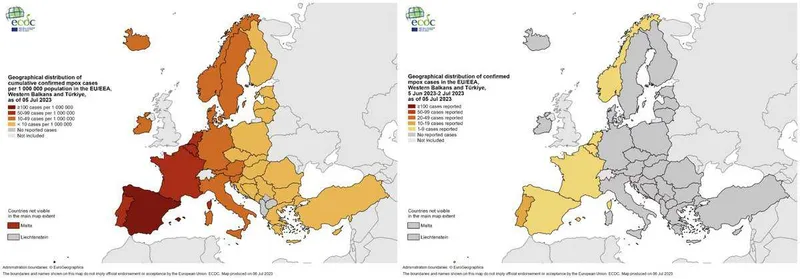
Monkeypox prevalence in various countries:
Joint ECDC-WHO Regional Office for Europe Mpox Surveillance Bulletin (europa.eu)
Surveillance summary
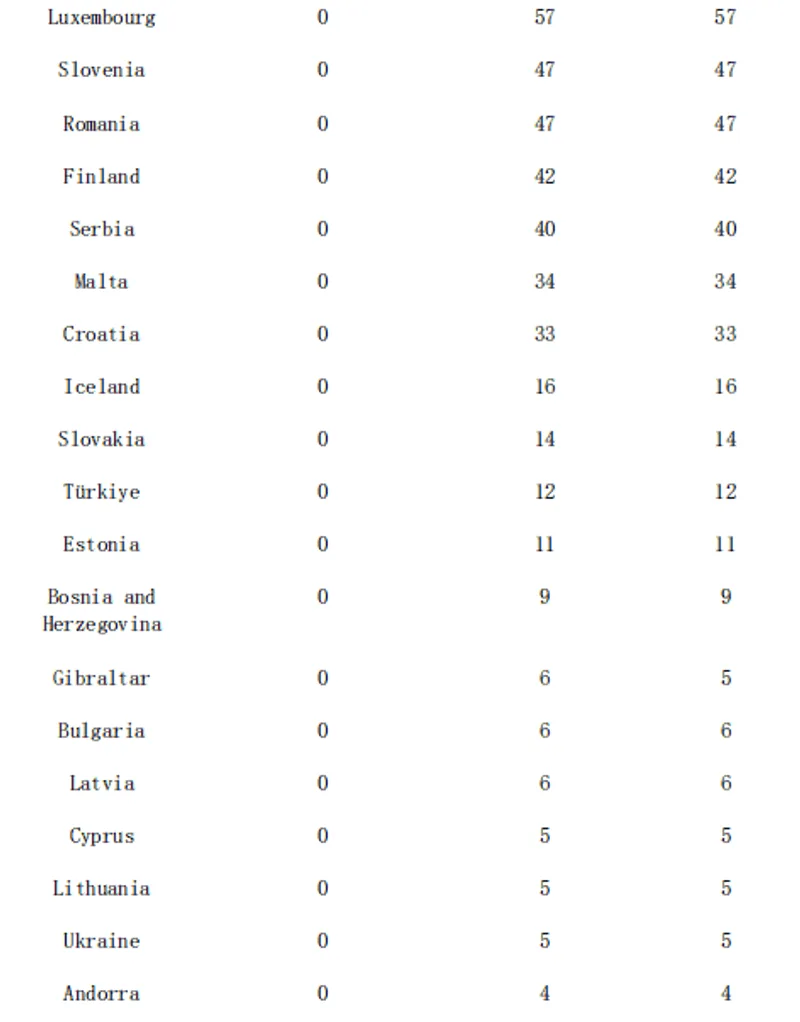
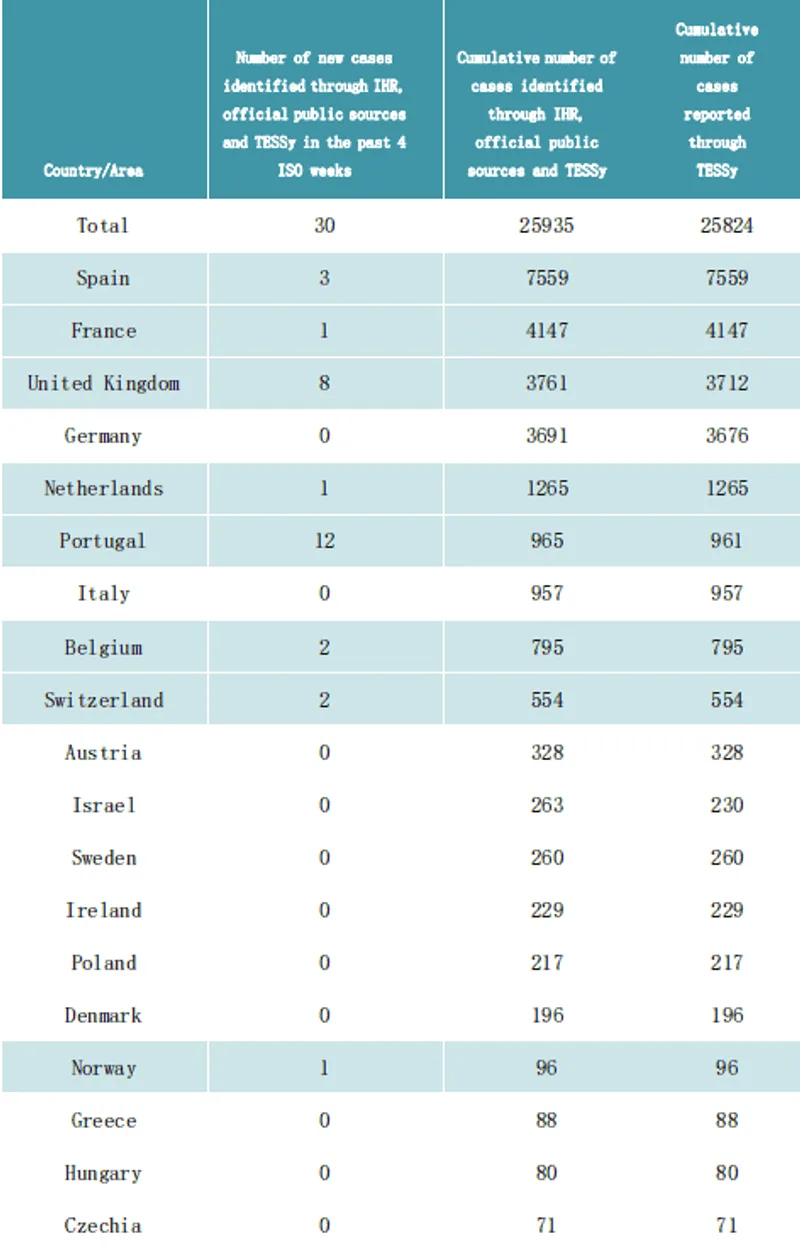
A total of 25,935 cases of mpox (formerly named monkeypox) have been identified through IHR mechanisms, official public sources and TESSy up to 06 July 2023, 14:00, from 45 countries and areas throughout the European Region. Over the past 4 weeks, 30 cases of mpox have been identified from 8 countries and areas.
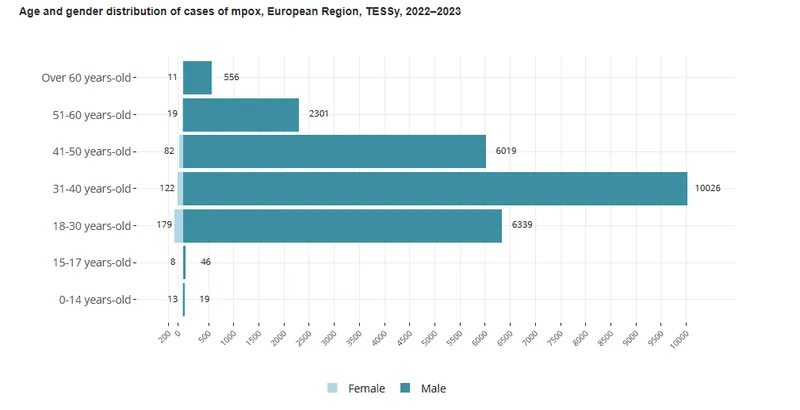
Case-based data were reported for 25,824 cases from 41 countries and areas to ECDC and the WHO Regional Office for Europe through The European Surveillance System (TESSy), up to 06 July 2023, 10:00. Of the 25,824 cases reported in TESSy, 25,646 were laboratory confirmed. Furthermore, where sequencing was available, 489 were confirmed to belong to Clade II, formerly known as the West African clade. The earliest known case has a specimen date of 07 March 2022 and was identified through retrospective testing of a residual sample. The earliest date of symptom onset was reported as 17 April 2022. The majority of cases were between 31 and 40 years-old (10,167/25,794 – 39%) and male (25,327/25,761 – 98%). Of the 11,317 male cases with known sexual orientation, 96% self-identified as men who have sex with men. Among cases with known HIV status, 38% (4,064/10,675) were HIV-positive. The majority of cases presented with a rash (15,358/16,087 – 96%) and systemic symptoms such as fever, fatigue, muscle pain, chills, or headache (10,921/16,087 – 68%). There were 789 cases hospitalised (6%), of which 275 cases required clinical care. Eight cases were admitted to ICU, and seven cases of mpox were reported to have died. To date, WHO and ECDC have been informed of five cases of occupational exposure. In four cases of occupational exposure, health workers were wearing recommended personal protective equipment but were exposed to body fluid while collecting samples. The fifth case was not wearing personal protective equipment. The WHO interim guidance on clinical management and infection prevention and control for mpox remains valid and is available at https://apps.who.int/iris/handle/10665/355798. Summary of number of cases of mpox identified through IHR mechanisms and official public sources and reported to TESSy, European Region, 2022–2023
Countries and areas reporting new cases in the past 4 ISO weeks are highlighted in blue.
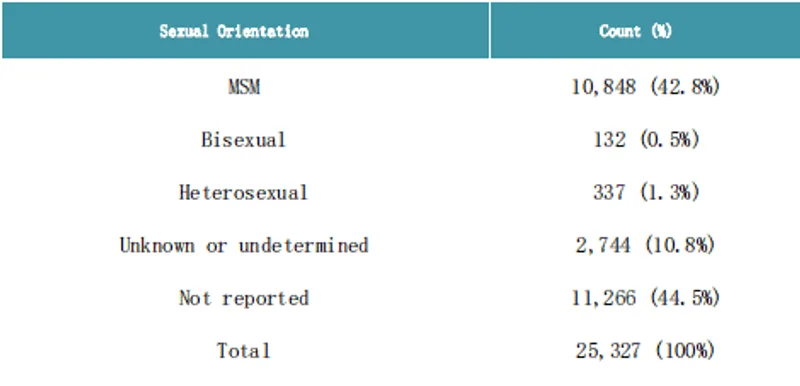
Summary of reported sexual orientations among male cases of mpox, European Region, TESSy, 2022–2023
Sexual orientation in TESSy is defined according to the following non-mutually exclusive categories:
Sexually Transmitted Diseases
Infectious Disease
Monkey Pox Virus
Summary of reported sexual orientations among male cases of mpox, European Region, TESSy, 2022–2023
Sexual orientation in TESSy is defined according to the following non-mutually exclusive categories:

- Heterosexual
- MSM = MSM/homo or bisexual male
- Women who have sex with women
- Bisexual
- Other
- Unknown or undetermined
Transmission
Person-to-person transmission of mpox can occur through direct contact with infectious skin or other lesions such as in the mouth or on genitals; this includes contact which is- face-to-face (talking or breathing)
- skin-to-skin (touching or vaginal/anal sex)
- mouth-to-mouth (kissing)
- mouth-to-skin contact (oral sex or kissing the skin)
- respiratory droplets or short-range aerosols from prolonged close contact
Signs and symptoms
Mpox causes signs and symptoms which usually begin within a week but can start 1–21 days after exposure. Symptoms typically last 2–4 weeks but may last longer in someone with a weakened immune system. Common symptoms of mpox are:- rash
- fever
- sore throat
- headache
- muscle aches
- back pain
- low energy
- swollen lymph nodes.
- palms of hands and soles of feet
- face, mouth and throat
- groin and genital areas
- anus.
Sexually Transmitted Diseases
Infectious Disease
Monkey Pox Virus